Desirable / Optimal Level
Less than 200 mg/dL
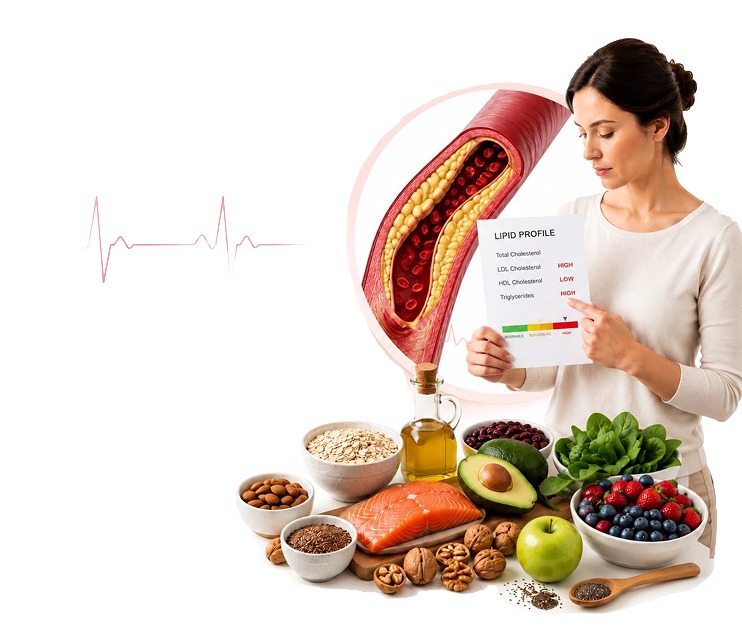


High cholesterol. Often called a silent risk. It can rise without warning signs. Quietly affecting your heart and blood vessels. You may feel completely healthy. Yet elevated cholesterol or triglycerides gradually increase your risk. Heart disease. Stroke. Other cardiovascular concerns. That is why regular lipid profile testing matters. Timely lifestyle support too.
Cholesterol itself is not the enemy. Your body needs it. Hormone production. Cell function. Digestion. All rely on it. The concern begins when LDL cholesterol goes too high. That is the bad one. It contributes to plaque buildup in arteries. On the other hand, HDL cholesterol. The good one. It helps remove excess cholesterol from your body. High triglycerides may develop too. Excess sugar intake plays a part. Refined carbohydrates. Weight gain. Insulin resistance. An inactive lifestyle. All contribute.
At our Food Pharmacy, we take a different approach. Practical, personalized, and Sustainable. We do not simply ask you to avoid certain foods. Instead, we help you understand what drives your cholesterol. Improve the quality of your meals. Build a customized high cholesterol diet plan. One that fits your health reports. Your lifestyle. Your food preferences. Your long-term heart health goals. That is our focus on nutrition for high cholesterol and High Cholesterol management.
A lipid profile typically classifies cholesterol and other blood fats into distinct components. Understanding these values helps identify whether the main concern is high LDL cholesterol, low HDL cholesterol, high triglycerides, or a mixed pattern of abnormal lipids.
Less than 200 mg/dL
200–239 mg/dL
240 mg/dL or above
Less than 100 mg/dL
130–159 mg/dL
160 mg/dL or above; 190 mg/dL or above is very high
60 mg/dL or above is considered protective
Less than 40 mg/dL may increase risk
Higher HDL is generally better
Less than 150 mg/dL
150–199 mg/dL
200 mg/dL or above
Usually target is about 30 mg/dL higher than LDL goal
Depends on individual cardiovascular risk
Higher levels May indicate increased atherogenic cholesterol particles
Cholesterol patterns may also be described as isolated high LDL cholesterol, high triglycerides, low HDL cholesterol, or mixed dyslipidemia, where more than one lipid value is abnormal. Each pattern may require a slightly different nutrition and lifestyle strategy, which is why personalized assessment is important.
Nutrition is key to cholesterol management. Each lipid pattern needs a different focus. LDL may need more fibre. Healthy fats too. High triglycerides need better sugar control. Carb control. Portion control.
At Food Pharmacy, we identify your specific cholesterol pattern. Then we create practical food strategies. Strategies that support heart health. Strategies that fit your lifestyle. Effective cholesterol management begins with the right nutrition. It helps improve your lipid profile. Supports healthy arteries. Protect your heart over time. That is the goal.

Focuses on increasing soluble fibre from foods such as oats, barley, beans, lentils, fruits, and vegetables. Soluble fibre may help support healthier LDL cholesterol levels by reducing cholesterol absorption in the gut.

Helps reduce excessive saturated and trans fats while encouraging better fat choices such as nuts, seeds, olive oil, avocado, and other unsaturated fat sources. This supports improved LDL and overall heart health.

Designed for individuals with high triglycerides by reducing excess sugar, sugary beverages, refined carbohydrates, oversized portions, and frequent high-calorie snacking. It also supports better blood sugar and insulin balance.

Encourages a balanced lifestyle pattern that may support healthier HDL levels, including better fat quality, regular activity, weight management when needed, and avoiding highly processed foods.

Supports abdominal fat reduction, insulin resistance improvement, fatty liver management, and better metabolic health through portion control, balanced meals, protein quality, and consistent eating habits

Turns cholesterol guidance into a practical daily plan with breakfast, lunch, dinner, snacks, food swaps, cooking tips, and portion guidance based on your lipid profile, routine, food preferences, medications, and health goals.
Managing cholesterol is not about restriction; it is about choosing foods that work better for your body.
Usually no noticeable symptoms (often called a "silent condition").
People with a family history of high cholesterol, heart disease, diabetes, obesity, or an unhealthy lifestyle.
Can lead to plaque buildup (atherosclerosis), increasing the risk of heart attack, stroke, and coronary artery disease.
Routine lipid profile (blood test) measuring Total Cholesterol, LDL, HDL, and Triglycerides.
Yellowish cholesterol deposits around the eyes (xanthelasma), fatty deposits on the skin or tendons (xanthomas), or a white ring around the cornea (corneal arcus).
Adults with risk factors or a family history should have regular lipid profile screening , even if they feel healthy.
The long-term concern is that elevated cholesterol may contribute to plaque buildup in the arteries , which can gradually reduce blood flow.
Because high cholesterol can be silent, nutrition support should ideally be combined with regular medical monitoring and appropriate follow-up testing.
It can develop from several things. Genetics play a role. Diet matters. Metabolic factors are too. Lifestyle as well. Often a combination.
A diet high in saturated fats. Trans fats. Excessive processed foods. Highly refined carbohydrates. These may negatively affect blood lipids. But here is the thing. The impact of individual foods varies. From person to person.
Especially abdominal fat. It links to insulin resistance. High triglycerides. Low HDL cholesterol. Other metabolic changes too.
Low activity levels contribute to weight gain. Insulin resistance. An unfavorable lipid profile. All connected.
High blood sugar affects fat processing. Elevated triglycerides. Other lipid abnormalities. Common in these cases.
An underactive thyroid. It can elevate cholesterol. Managing the thyroid condition becomes important. Part of overall health management.
Certain medications. Kidney disease. Liver conditions. Hormonal changes. Other medical conditions. All can affect cholesterol levels.
Some inherit conditions. Significant cholesterol elevation. Familial hypercholesterolemia. These cases may need medical treatment. Alongside lifestyle changes.
This is why identifying the cause matters. Important for developing an individualised diet plan. For high cholesterol patients. One size does not fit all.
Our program is designed to provide personalized nutrition support rather than a generic diet chart.
Our process. Simple and thorough
First, a comprehensive nutrition assessment. We review your eating habits. Your lifestyle. Medical history. Activity levels. Food preferences. Relevant health reports. Everything.
Third, your personalised nutrition Plan. Practical Designed around your routine. Your food preferences. Indian culture. Cooking habits. Health goals.
Fifth, support for high cholesterol and triglycerides. If you have both, we address both. Fat quality. Fibre, Carbohydrate quality. Portion control. Lifestyle strategies. Combined approach.
Second, a lipid-focused nutrition strategy. Your plan matches your specific lipid profile. LDL cholesterol. HDL cholesterol. Triglycerides. Other markers too.
Fourth, customised meal planning throughout the day. Snacks and recipes. Portion guidance and suitable food swaps. All are included.
Sixth, regular monitoring and adjustments. Nutrition is not a one-time prescription. We review your progress. Your adherence. Your challenges. Your health goals. Then we adjust. When needed. That is how it works.
High cholesterol often has no noticeable symptoms, but over time it can lead to plaque buildup in the arteries (atherosclerosis), increasing the risk of heart disease, heart attack, and stroke.
Early diagnosis, a personalized high cholesterol diet plan, regular physical activity, and healthy lifestyle habits can help improve cholesterol levels, protect heart health, and reduce the risk of future cardiovascular complications.
Our high cholesterol nutrition program may be suitable for individuals who
If you are taking cholesterol-lowering medication, nutrition support can still be valuable. Dietary changes should complement medical care and should not replace prescribed medications without guidance from your healthcare professionals.
Successful cholesterol management. It starts with a personalised plan. Practical. Sustainable. Not restrictive diets. We assess your health. Your lifestyle. Your eating habits. Your lipid profile. Then we create a plan. Tailored to your needs. Our focus? Improving fibre intake. Choosing healthier fats. Balancing meals. Building lifelong habits. Not eliminating your favourite foods. Because the best high cholesterol diet plan is one that fits your lifestyle. Easy to follow. For the long term.
Whether you need a diet plan for high cholesterol patients, a high cholesterol diet meal plan, or a diet plan for high cholesterol and triglycerides, personalized guidance can help you understand what works best for your body and lifestyle.