Inflammatory
Bowel Disease (IBD)
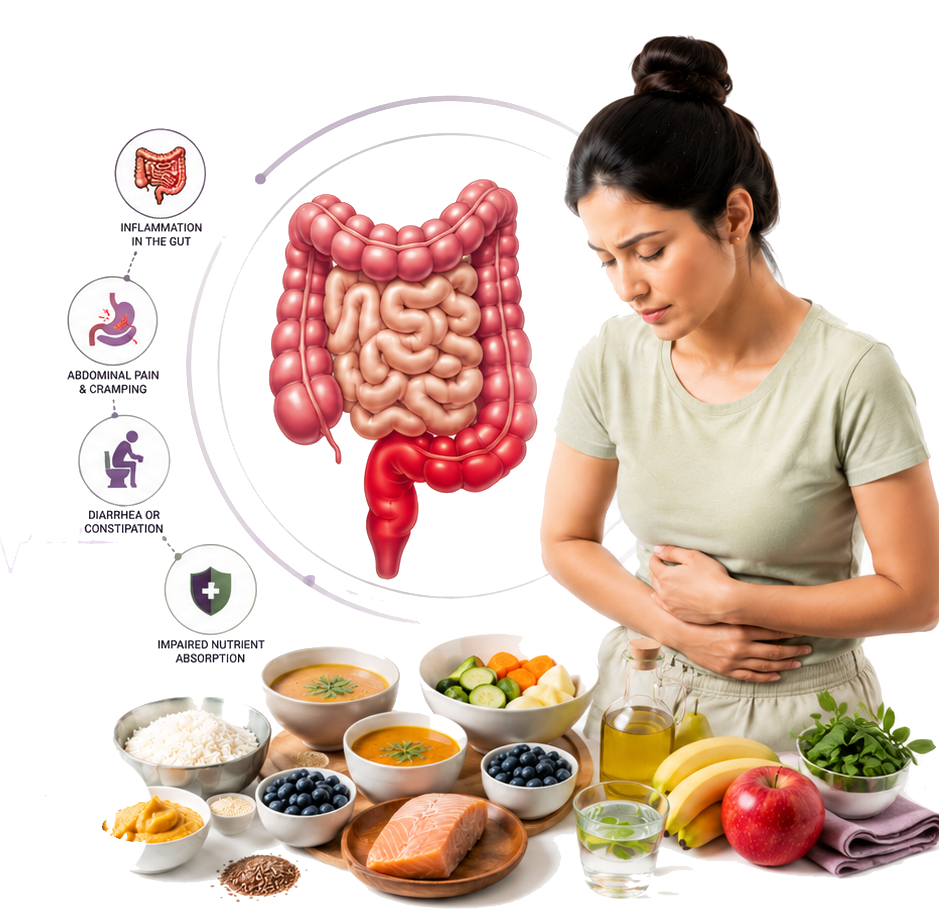


Inflammatory Bowel Disease (IBD) refers to long-term inflammatory conditions that affect the digestive system, mainly including two types: Crohn's disease and ulcerative colitis. While both conditions can cause similar issues such as stomach pain, diarrhea, and fatigue, they affect different parts of the gut and have distinct characteristics. Crohn's disease can affect any section of the digestive tract and often leads to deeper inflammation, whereas ulcerative colitis is limited to the colon and rectum, primarily causing inflammation of the inner lining.
At Food Pharmacy, our nutrition experts provide a personalized approach for managing Inflammatory Bowel Disease (IBD). We focus on sustainable lifestyle changes that support gut health rather than quick fixes or restrictive diets. By understanding how your body interacts with food, we empower you to manage symptoms effectively and improve your quality of life. Our customized nutrition plans are designed to fit seamlessly into your daily routine, promoting a positive relationship with food without the stress of calorie counting.We also help you identify personal food triggers while ensuring your nutritional needs are met during every stage of your IBD journey.
Nutrition is a crucial supportive tool in IBD care, helping manage symptoms, improve nutritional status, and enhance overall well-being alongside medical treatment.
Help maintain adequate calorie and nutrient intake despite poor appetite and symptoms
Supports replenishment of common deficiencies like iron, vitamin B12, vitamin D, calcium, and folate
Provides essential nutrients that help repair the intestinal lining and reduce complications
Ensures sufficient energy intake to reduce fatigue and weakness
Helps identify and modify trigger foods to reduce diarrhea, pain, and discomfort
Helps maintain remission and improves overall quality of life A personalized approach to nutrition works best, as no single diet fits all individuals.
IBD symptoms come and go they can be mild or severe. You can't predict when they'll happen.
Crohn's disease is a condition that can impact any part of the digestive system, from your mouth to your bottom, but it usually affects the last part of the small intestine and the beginning of the colon. This disease causes inflammation, which can make some areas swollen and sore, and it can affect the entire thickness of the bowel wall. Because of this, people with Crohn's might experience symptoms like stomach pain, diarrhea, feeling tired, losing weight, and not wanting to eat. It can also lead to complications such as narrow areas in the intestines, abnormal connections between organs, or problems with nutrient absorption.
 Genetic susceptibility (family history increases risk)
Abnormal immune system response (immune system attacks gut tissue)
Imbalance in gut microbiome (dysbiosis)
Environmental triggers (diet patterns, infections, antibiotics)
Smoking (major risk factor, worsens disease)
Stress (can aggravate symptoms, not a direct cause)
Interaction of multiple factors rather than a single cause
Genetic susceptibility (family history increases risk)
Abnormal immune system response (immune system attacks gut tissue)
Imbalance in gut microbiome (dysbiosis)
Environmental triggers (diet patterns, infections, antibiotics)
Smoking (major risk factor, worsens disease)
Stress (can aggravate symptoms, not a direct cause)
Interaction of multiple factors rather than a single cause
Ulcerative colitis is a condition that only affects the colon and rectum. Unlike Crohn's disease, where inflammation can appear in different spots, ulcerative colitis causes continuous inflammation, mainly in the inner lining of the bowel. Common signs of this condition are sudden urges to use the bathroom, diarrhea, and sometimes blood or mucus in the stool. People may also feel stomach pain, tiredness, and loss of appetite. When the disease is more severe, it can make it hard to take in enough nutrition and water, leading to dehydration, unintended weight loss, and reduced energy levels over time.
 Genetic predisposition (family history increases risk)
Abnormal immune system response (immune system attacks the colon lining)
Inflammation is limited to the colon and rectum
Gut microbiome imbalance (altered intestinal bacteria)
Environmental factors (diet, infections, antibiotic use)
Non-smoking status or smoking cessation (associated with higher risk)
Stress (may worsen symptoms but is not a direct cause)
Combination of multiple factors rather than a single cause
Can affect any part of the digestive tract (mouth to anus).
Inflammation occurs in patches (healthy tissue between affected areas).
Affects the entire thickness of the bowel wall.
More likely to cause weight loss, nutrient deficiencies, and malabsorption.
Can lead to fistulas, abscesses, and bowel narrowing (strictures).
Abdominal pain is often on the lower right side.
Affects only the colon and rectum.
Inflammation is continuous without healthy gaps.
Affects only the inner lining of the colon.
Blood in stool is more common due to colon inflammation.
More commonly causes frequent bloody diarrhea and urgency.
Pain is usually felt in the lower left side or throughout the lower abdomen.
Genetic predisposition (family history increases risk)
Abnormal immune system response (immune system attacks the colon lining)
Inflammation is limited to the colon and rectum
Gut microbiome imbalance (altered intestinal bacteria)
Environmental factors (diet, infections, antibiotic use)
Non-smoking status or smoking cessation (associated with higher risk)
Stress (may worsen symptoms but is not a direct cause)
Combination of multiple factors rather than a single cause
Can affect any part of the digestive tract (mouth to anus).
Inflammation occurs in patches (healthy tissue between affected areas).
Affects the entire thickness of the bowel wall.
More likely to cause weight loss, nutrient deficiencies, and malabsorption.
Can lead to fistulas, abscesses, and bowel narrowing (strictures).
Abdominal pain is often on the lower right side.
Affects only the colon and rectum.
Inflammation is continuous without healthy gaps.
Affects only the inner lining of the colon.
Blood in stool is more common due to colon inflammation.
More commonly causes frequent bloody diarrhea and urgency.
Pain is usually felt in the lower left side or throughout the lower abdomen.
We understand that managing Inflammatory Bowel Disease (IBD) requires a multifaceted approach.
Personalized nutrition assessment based on symptoms, diagnosis, lab reports, medications, and lifestyle
Meal planning for flare-ups, remission, low appetite, weight loss, or food intolerance
Guidance on managing nutrient deficiencies and improving overall nutritional status
Support with practical eating strategies for work, travel, social events, and daily life
Education on balanced, evidence-based food choices without unnecessary restrictions
Ongoing follow-up to adjust your plan as symptoms and needs change
People newly diagnosed with Crohn's disease or ulcerative colitis
Those experiencing weight loss, fatigue, poor appetite, or nutrient deficiencies
Individuals having difficulty identifying food triggers or tolerances
Those wanting to improve overall gut health and energy levels
Individuals struggling with flare-ups, digestive symptoms, or food-related anxiety
Patients looking for practical meal guidance during treatment or recovery
People with frequent relapses or inconsistent symptom control
Anyone looking for a sustainable, personalized nutrition plan alongside medical care
Our approach is patient-centered, practical, and evidence-based. We understand that IBD affects everyone differently, so we do not believe in one-size-fits-all diet plans. Instead, we work with your diagnosis, symptoms, food tolerance, routine, and treatment plans to create realistic nutrition strategies that support both gut health and everyday living. Our goal is to help you feel more confident about eating, reduce confusion around food choices, and support better long-term health in partnership with your medical team.
Book an IBD nutrition consultation with our expert dietitians today. Gut-friendly meals. Symptom-focused care. A personalized plan to help you eat with confidence.