Normal
Systolic<120 mmHg
Diastolic<80 mmHg
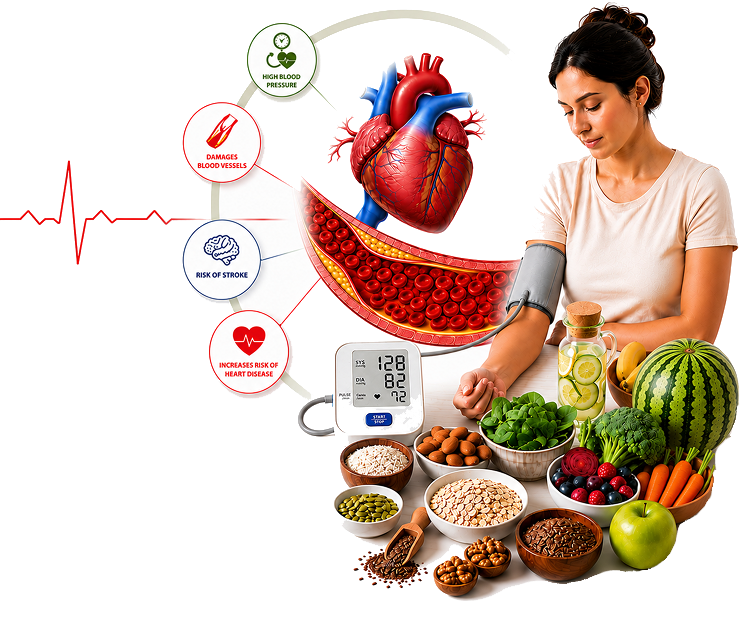


High blood pressure, also referred to as hypertension, is one of the most prevalent diseases around the world. This occurs when blood pressure remains constantly elevated in your arteries.
Known to be a “silent condition”, high blood pressure may not exhibit any symptoms in the initial stages. However, it may eventually lead to complications such as heart disease, stroke, and kidney disease because of the effects it has on the brain, heart, kidneys, eyes, and blood vessels.
The great thing about high blood pressure is that you can manage it through nutrition and other lifestyle modifications. By making these adjustments, you can limit your sodium intake, maintain a healthy diet, and maintain a healthy body weight while meeting your daily requirements for magnesium, potassium, calcium, and fiber.
Here at Food Pharmacy, our goal is to ensure that nutrition for high blood pressure becomes practical, sustainable, and easy to follow in your everyday routine. We focus on personalized food guidance, simple Indian based meal planning, and realistic lifestyle changes that support better blood pressure control without making your diet feel restrictive or difficult to maintain.
Nutrition plays a central role in both causing and controlling high blood pressure. What you eat every day directly affects your blood vessels, sodium-potassium balance, and heart health. A poor diet high in salt, unhealthy fats, and processed food can raise blood pressure, while a balanced, nutrient-rich diet can help bring it back to a healthy range.
Limiting excess sodium can help reduce fluid retention and support healthier blood pressure levels, especially in individuals with hypertension.
Fruits, vegetables, legumes, and other potassium rich foods can support healthy blood pressure regulation and help balance sodium levels in the body.
The DASH eating pattern focuses on fruits, vegetables, whole grains, legumes, nuts, and healthy fats while limiting excess salt and processed foods.
Including sources of unsaturated fats, such as nuts, seeds, olive oil, and fatty fish, while limiting saturated and trans fats supports overall cardiovascular health.
Fresh, nutrient-dense foods provide essential vitamins, minerals, and fiber while helping reduce the hidden sodium often found in packaged and ultra-processed foods.
A personalized nutrition plan can support healthy weight management, which may help reduce the strain on the heart and contribute to better blood pressure control.
Blood pressure is measured using two numbers
The pressure when the heart contracts.
The pressure when the heart relaxes between beats.
Hypertension usually develops slowly and silently, which is why regular blood pressure checks are so important. Some people may not notice any symptoms until blood pressure becomes very high. Common symptoms include:
 Frequent headaches, especially in the morning
Dizziness or lightheadedness
Blurred or disturbed vision
Shortness of breath
Chest pain or a pounding feeling in the chest
Nosebleeds (in some cases)
Fatigue or tiredness without a clear reason
Frequent headaches, especially in the morning
Dizziness or lightheadedness
Blurred or disturbed vision
Shortness of breath
Chest pain or a pounding feeling in the chest
Nosebleeds (in some cases)
Fatigue or tiredness without a clear reason
If blood pressure remains high for a long time without treatment, it can lead to serious complications such as heart disease, stroke, and kidney failure.
Hypertension often develops gradually due to a combination of lifestyle, genetic, and medical factors. Many people are unaware of the underlying causes until routine health check-up. Common causes and risk factors include:
 Unhealthy diet too much salt, sugar, and processed or fried food
Being overweight or obese
Lack of physical activity or a sedentary lifestyle
Excess alcohol consumption and smoking
Chronic stress and poor sleep
Family history and genetics
Age (risk increases as you grow older)
Underlying conditions like diabetes, kidney disease, or thyroid disorders
Unhealthy diet too much salt, sugar, and processed or fried food
Being overweight or obese
Lack of physical activity or a sedentary lifestyle
Excess alcohol consumption and smoking
Chronic stress and poor sleep
Family history and genetics
Age (risk increases as you grow older)
Underlying conditions like diabetes, kidney disease, or thyroid disorders

A detailed evaluation of your health history, blood pressure patterns, lifestyle, dietary habits, and relevant medical reports.

A practical, customized meal plan designed around your health goals, food preferences, cultural eating habits, and lifestyle.

Guidance on reducing hidden sodium, reading food labels, choosing better alternatives, and managing salt intake effectively.

Learn how to include potassium-rich foods, fiber, whole grains, legumes, fruits, vegetables, and healthy fats to support cardiovascular health.

Nutrition guidance to support healthy weight management along with practical strategies for movement, sleep, stress, and sustainable lifestyle changes.

Regular follow-ups to monitor progress, review dietary challenges, and make adjustments to your nutrition plan as your needs evolve.
Newly diagnosed hypertensive patients who wish to learn about the impact of food selection, salt consumption, weight management, and routine on blood pressure control.
Overweight and obese people who require a healthy diet plan for gradual weight reduction, improved heart function, and reduced stress on the blood vessels.
Obstetric patients suffering from high blood pressure due to pregnancy require proper guidance to maintain a diet for appropriate nutrient intake, low salt content, proper hydration, and healthy weight gain.
Elderly individuals who are on medication for blood pressure and require nutrition assistance for better heart performance, kidney function, and consistent blood pressure control.
Patients who have a history of hypertension, stroke, or heart diseases in their families who wish to minimize risks by practicing preventive nutrition, proper monitoring, and lifestyle changes.
Diabetic or hypercholesterolemic patients who have issues such as fatty liver or metabolic problems and require proper nutrition advice for controlling glucose, cholesterol levels, and blood pressure.
The individuals who wish to develop healthy habits of eating for heart performance in the future and include individuals who suffer from stress, eat out often, eat processed foods regularly, or have inconsistent meal timings for meals.
Individuals who suffer from fluctuations in their blood pressure levels and wish to correct their lifestyle early, before the problem develops into something more serious.
Managing hypertension is not about simply removing salt from your plate; it's about creating a healthier relationship with food and lifestyle. We look beyond your blood pressure numbers to understand your complete health picture, eating habits, preferences, and daily routine. From there, we create a personalized, heart-supportive nutrition strategy focused on practical food choices, balanced nutrition, sustainable lifestyle changes, and continuous guidance. Our goal is to make blood pressure management feel simple, realistic, and sustainable so healthy choices become a natural part of your everyday life.
Book a hypertension nutrition consultation with our expert dietitians today. Heart-healthy meals. Blood pressure-focused care. A personalized plan to help you manage hypertension with confidence.